Here we are!
 Call us! 48569248
 Hours 9:00 to 17:30 from Monday to Friday

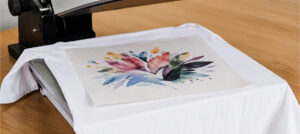
It is a printing technique that uses heat to transfer ink from special paper onto fabric or a polyester-coated surface. The design becomes embedded in the fibers rather than sitting on top, which prevents it from cracking or peeling after washing.
If you are planning to start a customization business, you have probably already come across the term without fully understanding what textile sublimation is or how the process works.
What is sublimation?
Sublimation converts solid ink directly into gas without passing through a liquid state. This gas penetrates the polyester fibers or the special coating on the surface, where it becomes permanently fixed instead of remaining as a layer on top of the fabric.
How the sublimation process works step by step
The sublimation process consists of four main stages:
- Design preparation: the artwork is created and the file is configured with the dimensions, resolution, and colors required for the product being customized.
- Printing on sublimation paper: the design is mirror-printed onto special paper using sublimation ink.
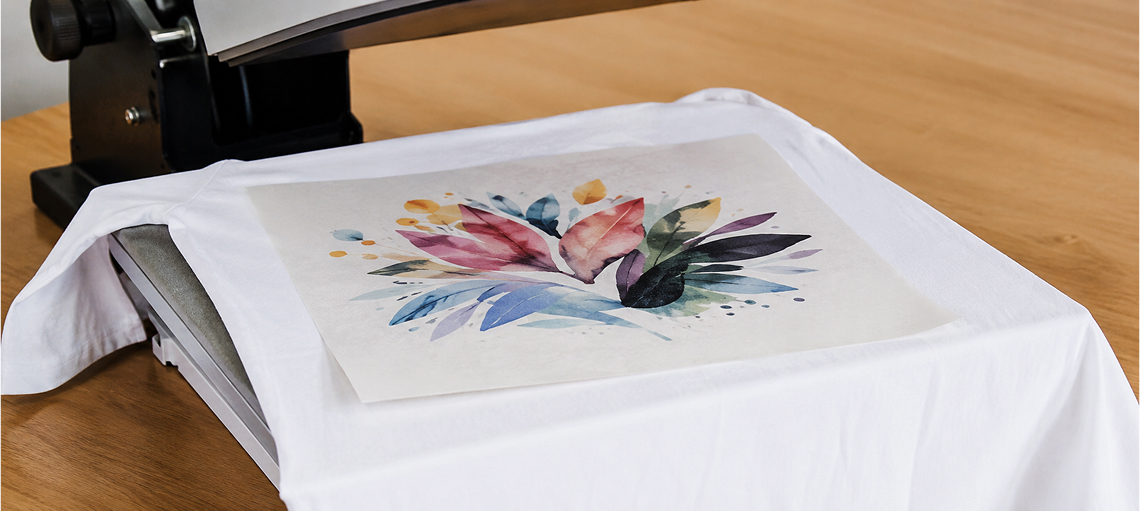
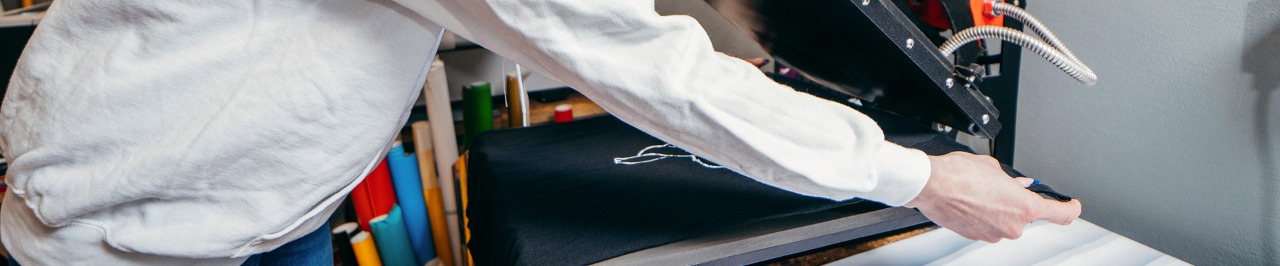
- Positioning and pressing: the printed paper is placed on the fabric or product, and heat and pressure are applied using a heat press, usually at a temperature between 180 and 200 degrees Celsius.
- Transfer and fixation: when heated, the ink changes directly into a gas, penetrates the material, and becomes permanently fixed as the surface cools.
The entire process, from printing to heat pressing, takes only a few minutes per item. For this reason, sublimation can be profitable even for customized products or short production runs.
What can be sublimated?
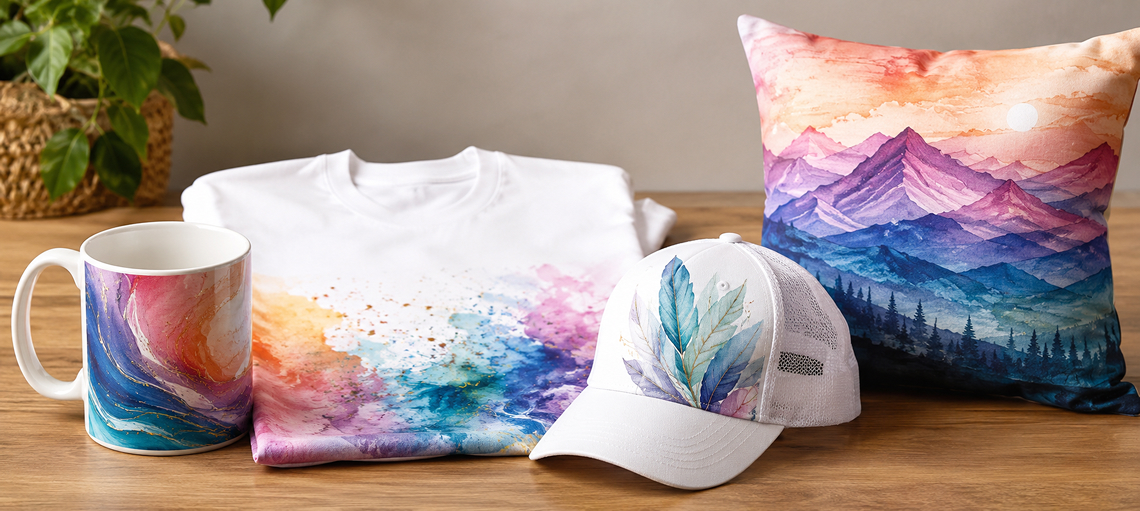
Fabric and product sublimation works on polyester materials or surfaces prepared with a special coating. Some of the most commonly used products include:
- T-shirts and textile garments: they must be made of polyester or contain a high percentage of this material to achieve vibrant colors and a long-lasting transfer.
- Mugs and ceramic products: they require a special coating designed to receive the ink during the heat-pressing process.
- Caps and accessories: they can be customized as long as the printing area and material are compatible with sublimation.
- Cushions and promotional merchandise: they make it possible to create customized products for decoration, gifts, events, or promotional campaigns.
Pure cotton cannot be sublimated correctly because its fibers do not retain the ink when it changes into a gaseous state. For this reason, garments used for sublimation are generally made of polyester or blends containing a high percentage of this material.
The importance of using sublimation ink
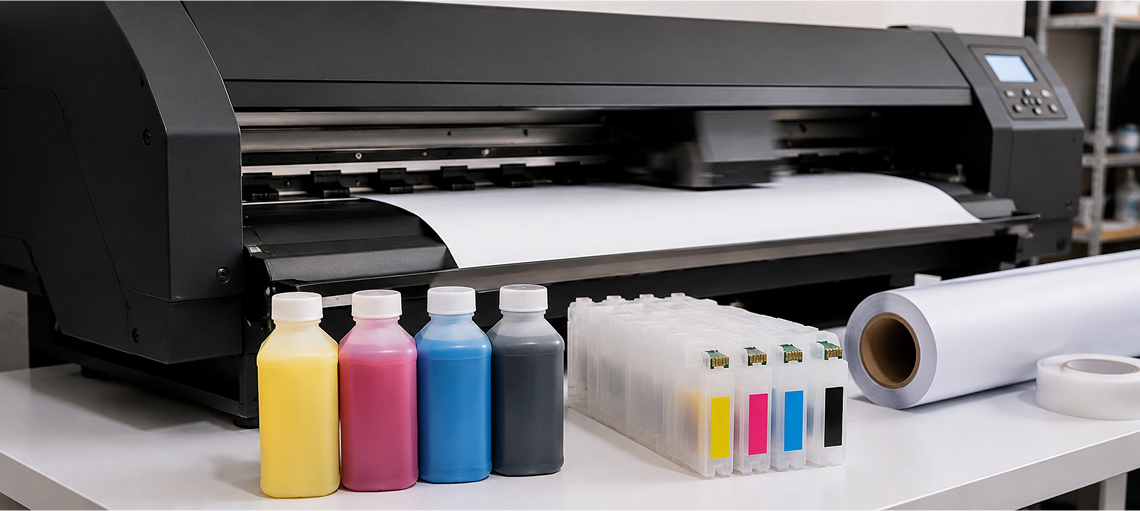
Specific sublimation ink is essential for this process. Conventional ink is not designed to react properly at high temperatures and may affect the final result, produce poorly defined colors, or even damage the printer’s printhead.
The quality of the ink, paper, and equipment used directly affects color intensity, design definition, and the durability of the printed image.
What equipment is needed to start sublimating?
To set up a basic sublimation system, the following equipment and supplies are required:
- Sublimation printer or plotter: used to print the design with special sublimation ink.
- Sublimation ink: formulated to transform into gas and bond with the material through heat.
- Sublimation paper: receives the printed design and allows it to be transferred correctly onto the product.
- Heat press: provides the temperature and pressure required to complete the transfer.
Using high-quality equipment and consumables makes the difference between a print that retains its colors for years and one that begins losing definition after the first few washes. Specialized companies such as Think GF offer the equipment and supplies needed to develop a complete sublimation system, from the printing plotter to the heat press.
Frequently asked questions about sublimation
- What is sublimation? It is a printing technique that uses heat to transfer ink onto fabric or another surface without passing through a liquid state, allowing the design to become embedded in the fibers.
- What fabrics can be sublimated? Polyester fabrics and blends containing a high percentage of polyester can be sublimated. Pure cotton does not properly retain sublimation ink.
- What is needed to start sublimating? A sublimation printer or plotter, specific sublimation ink, sublimation paper, and a heat press are required.