Here we are!
 Call us! 48569248
 Hours 9:00 to 17:30 from Monday to Friday

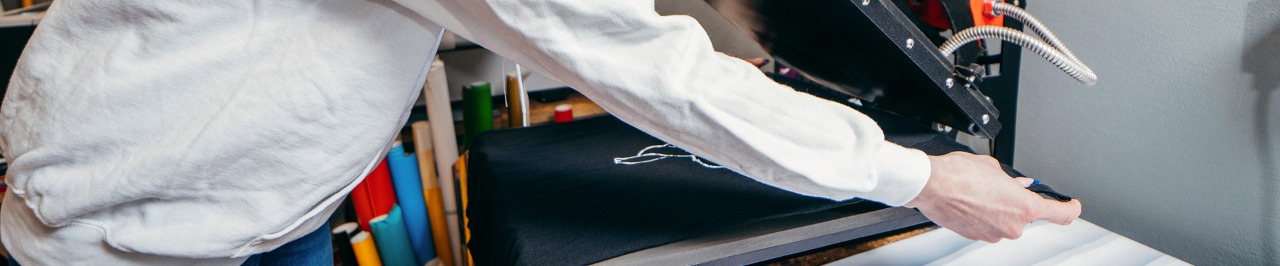
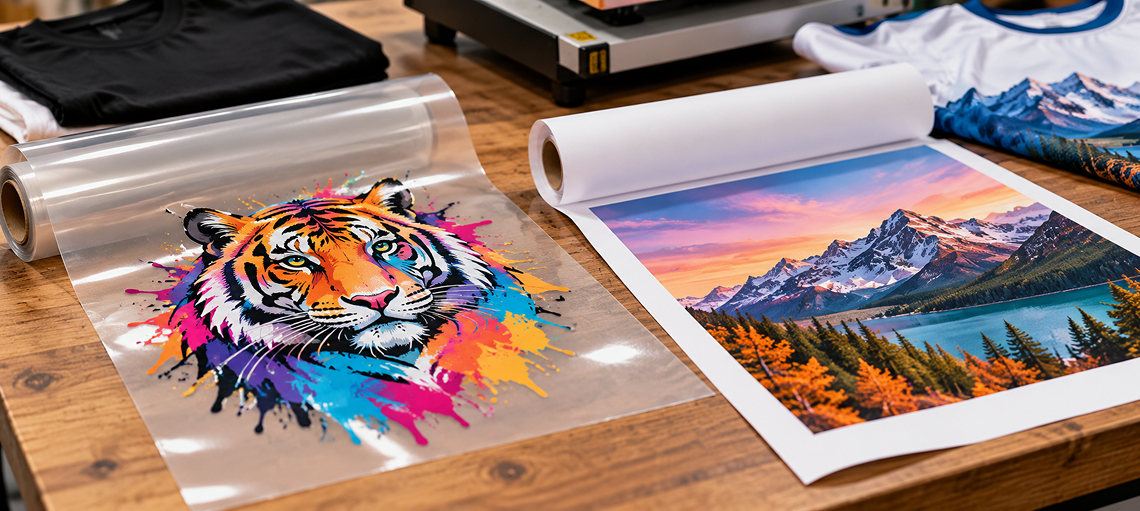
Both techniques transfer a design onto a garment using heat, but they work in very different ways. Sublimation embeds the ink into the polyester fibers. DTF printing prints the design onto a film and bonds it to the fabric with an adhesive powder, which means it works on cotton, blends, and dark-colored garments.
If you’re setting up a print shop or planning to add a new printing technique, before comparing machines you need to decide what you’re going to print, which fabrics you’ll work with, and in what quantities. Once you know that, the difference between DTF printing and sublimation becomes much clearer.
What is the difference between DTF printing and sublimation?
The main difference is where the ink ends up. In sublimation, at around 200 °C, the ink turns into gas and bonds with the polyester fibers or the coating of the object. With DTF, the design remains on top of the fabric, bonded with thermoplastic polyurethane powder (TPU), which melts under the heat of the press.
In practice, this determines what you can print with each technique. Sublimation is printed on sublimation paper and works on polyester (100% polyester or synthetic fabrics containing 85% polyester or more) and on coated products such as mugs and mouse pads. On dark garments, the design is barely visible or looks very faded because sublimation ink is transparent.
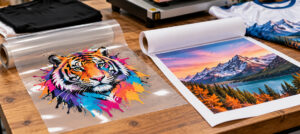
DTF textile printing is done on PET film with a layer of white ink underneath the colors. This white layer is what allows it to work on cotton, blended fabrics, and dark garments. For glass, metal, or wood, the appropriate option is UV DTF.
The finish is also different. A sublimated print cannot be felt to the touch and withstands washing without peeling. DTF creates a layer on top of the fabric, so the result depends more heavily on the pressing process. If the print feels too stiff or has excessive shine, there may have been too much powder or too much heat.
Can you sublimate dark fabrics or cotton?
No. Sublimation on dark fabrics does not work because sublimation inks are transparent and their color blends with the color of the fabric. On black fabric, the design almost disappears. Cotton has a similar problem for a different reason: natural fibers do not retain the ink when it turns into gas, so the resulting print looks faded.
That’s why sublimation printers work with 100% polyester, microfiber, dry-fit fabrics, micro tulle, Lycra, and synthetic fabrics containing 85% polyester or more. On these materials, the ink bonds with the fibers, producing bright colors, good definition, and strong wash resistance.
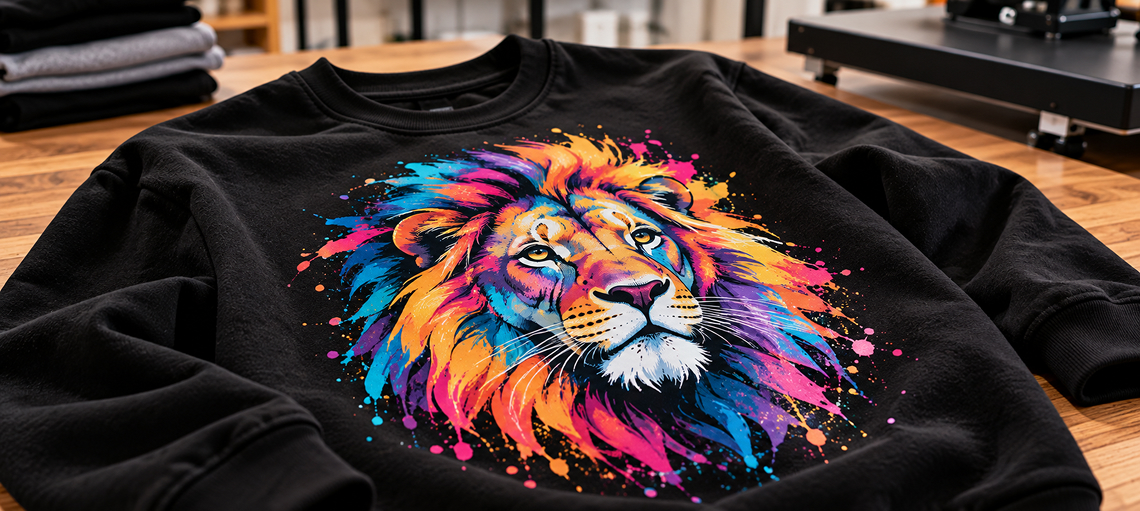
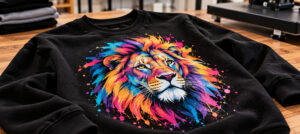
For black cotton T-shirts, fleece sweatshirts, or denim, DTF printing is the better-suited process. It prints in CMYK plus a layer of white ink that acts as an opaque base. This white layer allows the colors to remain visible on any background. The list of compatible fabrics is extensive: cotton, polyester, blends, Lycra, fleece, French terry, jersey, denim, nonwoven fabric, and even synthetic leather.
What production volume can each technique handle?
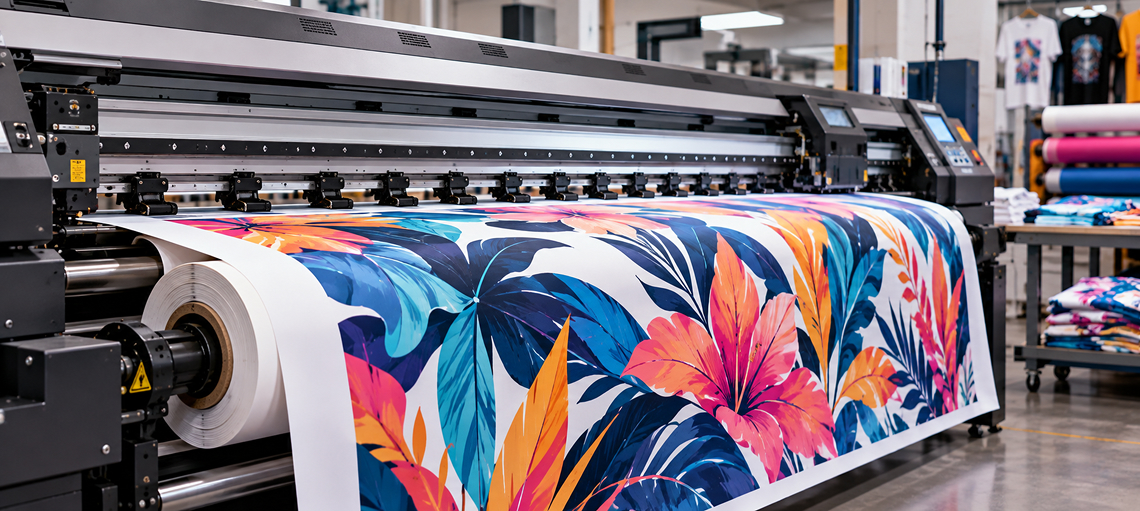
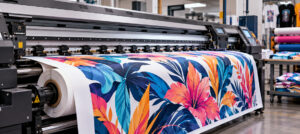
Sublimation scales much further in terms of square meters per hour. An industrial printer with 15 Epson I3200 printheads and a width of 1900 mm can reach 610 m²/h. DTF textile printers typically work with widths ranging from 300 to 600 mm and speeds ranging from 7.1 m²/h on A3 machines to 23 m²/h on 4-printhead machines.
For sublimation, the production scale is as follows:
- Epson F570: 620 mm print width, 2400 × 1200 dpi resolution, and an A1 print in 62 seconds.
- Fedar FD 5193: 3 Epson I3200 printheads, 1900 mm width, up to 120 m²/h.
- Fedar FD5194E: 4 printheads, 1900 mm width, up to 170 m²/h.
- Fedar FD6198E: 8 printheads, 1900 mm width, up to 320 m²/h.
- Fedar FD61915E: 15 printheads, 1900 mm width, up to 610 m²/h.
For DTF textile printing:
- ORIC A3: 2 Epson I1600 printheads, 300 mm width, 7.1 m²/h.
- AGP 2-head and ORIC 60 cm: 2 Epson I3200 printheads, 600 mm width, between 9 and 10 m²/h.
- M TU Tech: 2 Epson I3200 printheads, 600 mm width, 20 m²/h.
- ORIC 60 cm 4-head and AGP 4-head: 600 mm width, from 20 to 23 m²/h.
- DTF with 6 Epson I3200 printheads: 600 mm width, with a white ink circulation system for uninterrupted operation.
These numbers should not be treated as a simple speed competition. One square meter of sublimation and one square meter of DTF solve different types of jobs. A shop producing hundreds of soccer jerseys needs width and speed. A shop printing small batches of cotton sweatshirts with a different design on each one needs the flexibility to change files without stopping production.
What supplies does each process require?
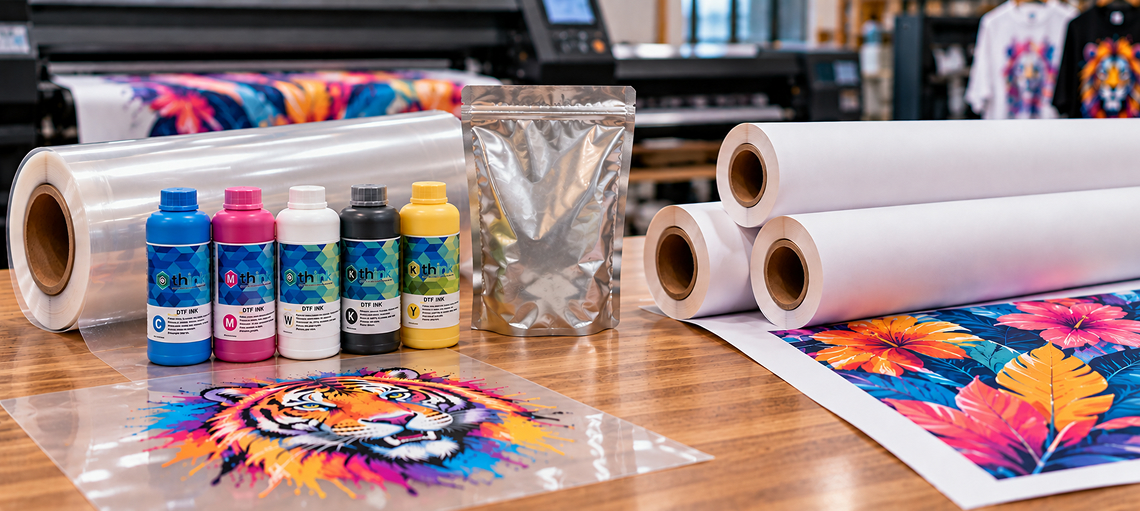
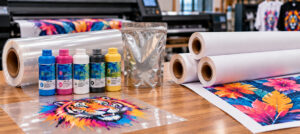
For sublimation, you need sublimation paper, sublimation ink, and a heat press. DTF textile printing requires PET film, DTF ink including white ink, thermoplastic polyurethane powder (TPU), and a heat press as well. In both cases, the quality of the film or paper and the ink affects how well the print withstands use and washing.
Sublimation paper comes in two main types. Imperial paper has its coating on the surface, which helps transfer a higher percentage of ink to the fabric. Jumbo paper has the coating incorporated into the paper itself. Available weights include 60, 70, and 80 g, with rolls ranging from 0.61 to 1.80 m wide.
With DTF, the type of film determines when it should be peeled. Standard PET film is removed after the design has cooled. Premium Hot Peel film can be removed while still hot, immediately after pressing. DTF ink should ideally be used within one month after opening and operated at temperatures between 18 and 27 °C. Polyurethane powder absorbs moisture, so it should be stored in a cool, dry place.
Should you choose DTF or sublimation?
It depends on the fabric and the type of product you work with. If you print on polyester, sportswear, mugs, or coated products, sublimation provides a print that becomes integrated into the material and offers industrial production speeds. If you print on cotton, dark garments, or a wide range of fabrics, DTF printing allows you to handle many different textile orders with the same equipment.
Choose sublimation if:
- You produce sports jerseys, dry-fit uniforms, or Lycra garments.
- You want to add mugs, mouse pads, caps, covers, or bags with a polyester coating.
- You need to print on rolls up to 1.90 m wide.
Choose DTF textile printing if:
- Your customers request cotton T-shirts, fleece sweatshirts, or denim garments.
- You frequently work with black garments or strong, dark colors.
- You want a 60 cm machine capable of handling many different types of fabric without changing printing techniques.
It doesn’t have to be a permanent choice. If you start with one technique and repeatedly find yourself turning down the same type of job, that may be a sign that it’s time to add the other process.
Think GF imports and distributes printers and supplies for both techniques, ranging from the Epson F570 to the Fedar FD series for sublimation, and from the ORIC A3 to 6-printhead machines for DTF textile printing. The service includes printer installation and guidance on choosing papers and inks, so you don’t have to make the decision without technical support. If you’re still comparing DTF vs sublimation for your particular application, contact the team before purchasing.
Frequently asked questions about DTF textile printing and sublimation
- Which is better, DTF or sublimation? Neither technique is best for every application. Sublimation performs better on polyester and coated products and can scale up to 610 m²/h. DTF printing is suitable for cotton, blended fabrics, and dark garments.
- Can you sublimate a cotton T-shirt? It does not produce good results. Sublimation requires polyester (85% or more in synthetic fabrics) or a polymer coating. For cotton garments, DTF textile printing is the suitable option.
- Does sublimation work on dark fabrics? No. Sublimation inks are transparent, so the design is not visible on a dark background. DTF uses white ink as a base layer, which allows it to work on black garments.
- Can DTF textile printing be used on glass, metal, or wood? No. DTF textile printing is designed for fabrics. For glass, metal, acrylic, or wood, UV DTF is used, transferring the design with A+B film without heat.
- What temperature does sublimation use? Approximately 200 °C for around 60 seconds. If the colors look dull, the first things to check are the pressing temperature and time.